Can You Tow an AWD or Electric Vehicle?
Yes—but only if it’s done correctly. All-wheel-drive (AWD) and electric vehicles (EVs) have unique drivetrains and components that make improper towing extremely risky. One wrong move can lead to transmission failure, motor damage, or expensive battery issues.
At Tow Truck Now, we regularly respond to calls where a vehicle was already damaged due to incorrect towing. Understanding the right method can save thousands in repairs.
Common AWD Towing Mistakes That Cause Damage
1. Towing With Two Wheels on the Ground
AWD systems are designed to keep all four wheels synchronized. When only two wheels are lifted, the drivetrain continues to rotate unevenly, which can destroy the transfer case or differential.
Correct method:
- Flatbed towing only
- Or a full wheel-lift with dollies (in rare manufacturer-approved cases)
Learn more about proper equipment on our flatbed towing solutions.
2. Ignoring Manufacturer Tow Guidelines
Every AWD vehicle has specific tow limits. Some allow short-distance emergency towing; others allow none at all.
Mistake: Assuming “short distance” means “safe.”
Reality: Damage can occur within minutes.
3. Using Improper Winching Angles
AWD vehicles often require winching during breakdowns or winter conditions. Incorrect angles or rushed hookups can strain axles and suspension.
For complex recoveries, our emergency tow truck service uses controlled winching designed for AWD systems.
Electric Vehicle Towing Mistakes You Must Avoid
1. Dragging an EV With Wheels Rolling
Electric motors generate power when wheels rotate—even when the car is off. This can overload systems and permanently damage the motor or inverter.
Never tow an EV with drive wheels on the ground.
2. Incorrect Jacking or Hook Points
EV battery packs are mounted under the vehicle floor. One wrong jack placement can puncture or crack the battery casing.
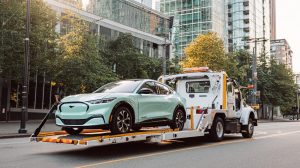
This is why EVs should always be loaded fully onto a flatbed, never dragged or improperly lifted.
3. Forgetting to Put the Vehicle in Tow Mode
Many EVs require a specific tow or transport mode to disengage systems. Skipping this step can lock brakes or trigger electrical faults.
AWD vs Electric Vehicle Towing: Safe Methods Comparison
| Vehicle Type | Unsafe Method | Safe Towing Method |
|---|---|---|
| AWD Vehicle | Two wheels on ground | Flatbed towing |
| AWD Vehicle | Front/rear wheel lift only | Flatbed or dollies |
| Electric Vehicle | Rolling wheels | Full flatbed transport |
| Electric Vehicle | Improper jacking | Manufacturer-approved lift points |
Why Flatbed Towing Is the Gold Standard
Flatbed towing eliminates drivetrain rotation, protects EV battery packs, and complies with manufacturer guidelines.
If you drive an AWD or EV, always request a professional flatbed towing service—especially after accidents, breakdowns, or dead batteries.
Related Services You May Need
- Battery failure? Use our battery boost and jump start service
- Locked out during a breakdown? Our lockout service can help
- Long trips or dealer transport? Request long distance towing
Serving AWD & EV Drivers Across Metro Vancouver
We provide specialized towing across:
Trusted, Industry-Recognized Towing Expertise
Tow Truck Now is recognized for innovation and safety-first towing practices. Learn more about our smart dispatching platform featured in the media:
- https://nationalpost.com/newsfile/272249-tow-truck-now-launches-smart-dispatching-platform-for-faster-towing-and-roadside-assistance-in-port-moody
- https://vancouversun.com/newsfile/272249-tow-truck-now-launches-smart-dispatching-platform-for-faster-towing-and-roadside-assistance-in-port-moody
Final Takeaway
Yes, AWD and electric vehicles can be towed—but only by professionals using the correct equipment. Improper towing is one of the fastest ways to turn a minor breakdown into a major repair bill.
FAQ Section
1) Can you tow an AWD vehicle with two wheels on the ground?
No. Towing an AWD vehicle with only two wheels lifted can force the drivetrain to rotate unevenly and cause serious damage. The safest option is a flatbed.
2) Is a flatbed always required for AWD towing?
In most cases, yes. Some vehicles may allow dollies in specific situations, but flatbed towing is the safest, most manufacturer-aligned method.
3) Can you tow an electric vehicle with the wheels rolling?
You generally should not. Many EVs can be damaged if the drive wheels spin during towing. A flatbed is the safest approach.
4) What is “Tow Mode” and do EVs need it?
Many EVs have a Tow/Transport Mode that helps prevent issues like brake lock, system faults, or drivetrain resistance. If your EV has it, it should be enabled before loading or transport.
5) Can towing damage an EV battery?
Yes—especially if the vehicle is lifted incorrectly or strapped improperly. EV battery packs are often under the floor, so correct lift points and flatbed loading are important.
6) What’s the safest way to tow an EV with a dead battery?
Use a flatbed. A dead 12V battery can prevent shifting to Neutral or enabling Tow Mode, so professional loading techniques are needed to avoid dragging the vehicle.
7) Is wheel-lift towing safe for AWD vehicles?
Usually not without dollies. Wheel-lift towing can cause drivetrain rotation and damage on AWD vehicles unless all wheels are off the ground.
8) When should you request flatbed towing instead of a standard tow?
Request a flatbed if you drive AWD, an EV, a hybrid, or any vehicle with drivetrain restrictions—or if the car is stuck, damaged, or won’t shift into Neutral.